
- Registered healthcare provider, RPWDL register no. 000000229528
- Over 700 locations within BadamySie.pl: blood collection, diagnostic tests and specialist consultations
- We carry out tests and consultations ourselves and through subcontractors
- Results online, no referral needed
- Operating since 2020 as the continuation of Poland’s first online shop for medical tests (sklep.etermed.pl, since 2013)
42,90 zł
Blood draw included in the price. How does it work?This price applies when you buy and pay online at BadamySie.pl; prices on site may differ. Please bring an ID document to your test.
- No referral needed
- Results online
- Over 700 locations
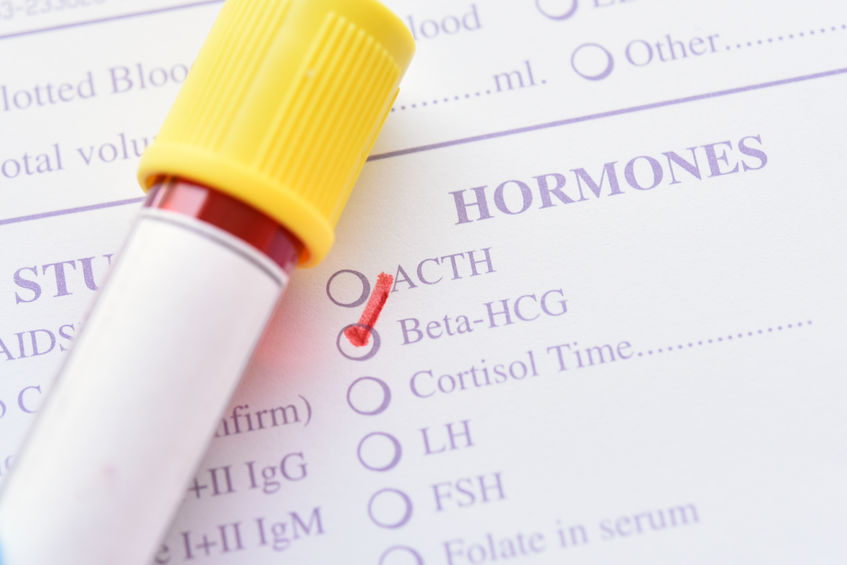
The test measures the level of hCG in the blood. An elevated level, once pregnancy has been ruled out, may indicate a tumour, such as an invasive mole or choriocarcinoma.
Add more tests
Description
Where
Any blood collection point listed in the basket
Results turnaround time
2 working days
Sample
Venous blood (serum)
Preparation
Before your blood sample is taken, you are advised to rest for about 15 minutes, drink a glass of water (250 ml) about 30 minutes before the test and attend after a full night’s rest.
Why is beta-hCG tested as a tumour marker?
Human chorionic gonadotrophin (hCG) is a hormone that, under normal physiological conditions, is produced mainly by the syncytiotrophoblast cells of the placenta. In healthy people who are not pregnant, its blood level is usually very low.
Measuring hCG levels in the blood plays an important role in diagnosing certain tumours. Once pregnancy has been ruled out, an elevated level of this hormone may indicate trophoblastic tumours, such as an invasive mole or choriocarcinoma. This marker is also used to diagnose certain testicular and ovarian germ cell tumours, including seminomas and other non-seminomatous testicular tumours.
The beta-hCG test is useful not only for diagnosis but also for assessing the effectiveness of cancer treatment. Regular measurement of this marker allows chemotherapy to be monitored and patients to be followed up after treatment, which may help detect recurrence early.
When should you have the test?
- If a tumour arising from trophoblastic tissue, such as a hydatidiform mole or an invasive mole, is suspected.
- To help diagnose choriocarcinoma.
- If certain testicular or ovarian germ cell tumours are suspected.
- Before starting cancer treatment, to establish the baseline marker level.
- During chemotherapy, to assess the effectiveness of treatment.
- After treatment, as part of cancer follow-up and monitoring the risk of recurrence.
How should you prepare?
- Rest for about 15 minutes before your blood sample is taken.
- You are advised to drink a glass of water, approximately 250 ml, about 30 minutes before the test.
- Attend your blood collection appointment after a full night’s rest.
How should the result be interpreted?
The result should be assessed in the context of the laboratory’s reference range, the patient’s clinical condition and any cancer diagnosis. Comparing successive measurements is particularly important, as changes in hCG levels over time may provide information about the course of the disease and the effectiveness of treatment.
- A low hCG level – is typical in healthy people who are not pregnant, but does not by itself rule out a tumour.
- An elevated hCG level – once pregnancy has been ruled out, may indicate a tumour that produces this hormone and requires further investigation.
- A decrease in the level during treatment – may indicate a favourable response to treatment.
- A persistently elevated level or a renewed rise – may indicate persistent active disease or recurrence and requires medical assessment.
A beta-hCG result alone cannot establish a tumour diagnosis. It should be interpreted alongside a clinical examination, imaging and other laboratory tests.
Which tests may be useful alongside beta-hCG?
When diagnosing and monitoring certain germ cell tumours, your doctor may also recommend measuring:
- AFP (alpha-fetoprotein) – a marker used to diagnose and monitor certain germ cell tumours.
- LDH (lactate dehydrogenase) – a parameter that helps assess prognosis and monitor certain tumours.
Assessing beta-hCG and AFP levels together with LDH activity provides additional information that helps assess prognosis, monitor treatment and follow up patients after treatment.
Frequently asked questions
Does an elevated beta-hCG level always mean a tumour?
No. An elevated hCG level can have various causes. Before interpreting the result as a tumour marker, pregnancy must first be ruled out and other factors that may affect the measurement should be considered.
Is the beta-hCG test used to monitor cancer treatment?
Yes. For tumours that produce hCG, measurements taken during and after treatment can help assess treatment effectiveness and detect possible recurrence.
Why is beta-hCG measured alongside AFP and LDH?
Combining the results of these markers provides broader information about the course of certain germ cell tumours, helps assess prognosis and makes it easier to monitor the response to treatment.
Does a normal beta-hCG result rule out a tumour?
No. Not all tumours produce enough hCG to raise its level in the blood. The result should therefore be assessed alongside other tests and the patient’s clinical picture.
Sources: ALAB laboratoria. This content is for information only and does not replace a medical consultation.
Where you can have this test
You choose the collection point when you order. Addresses, opening hours and preparation tips are in our city guide:
- Warsaw (75)
- Wrocław (35)
- Łódź (30)
- Krakow (29)
- Poznań (27)
- Gdańsk (22)
- Szczecin (22)
- Bydgoszcz (13)
- Gdynia (13)
- Rzeszów (13)
- Kielce (11)
- Lublin (11)
- All cities (57)
How to prepare for a blood test (fasting, medication, exercise)
Frequently bought together


Similar tests
-

Glucose – laboratory test
15,30 złBlood draw included in the price Add to cart -
Creatinine – laboratory test
14,40 złBlood draw included in the price Add to cart -
Lipid profile (cholesterol) – laboratory test
47,99 zł Add to cart -
Oestradiol – laboratory test
39,00 złBlood draw included in the price Add to cart